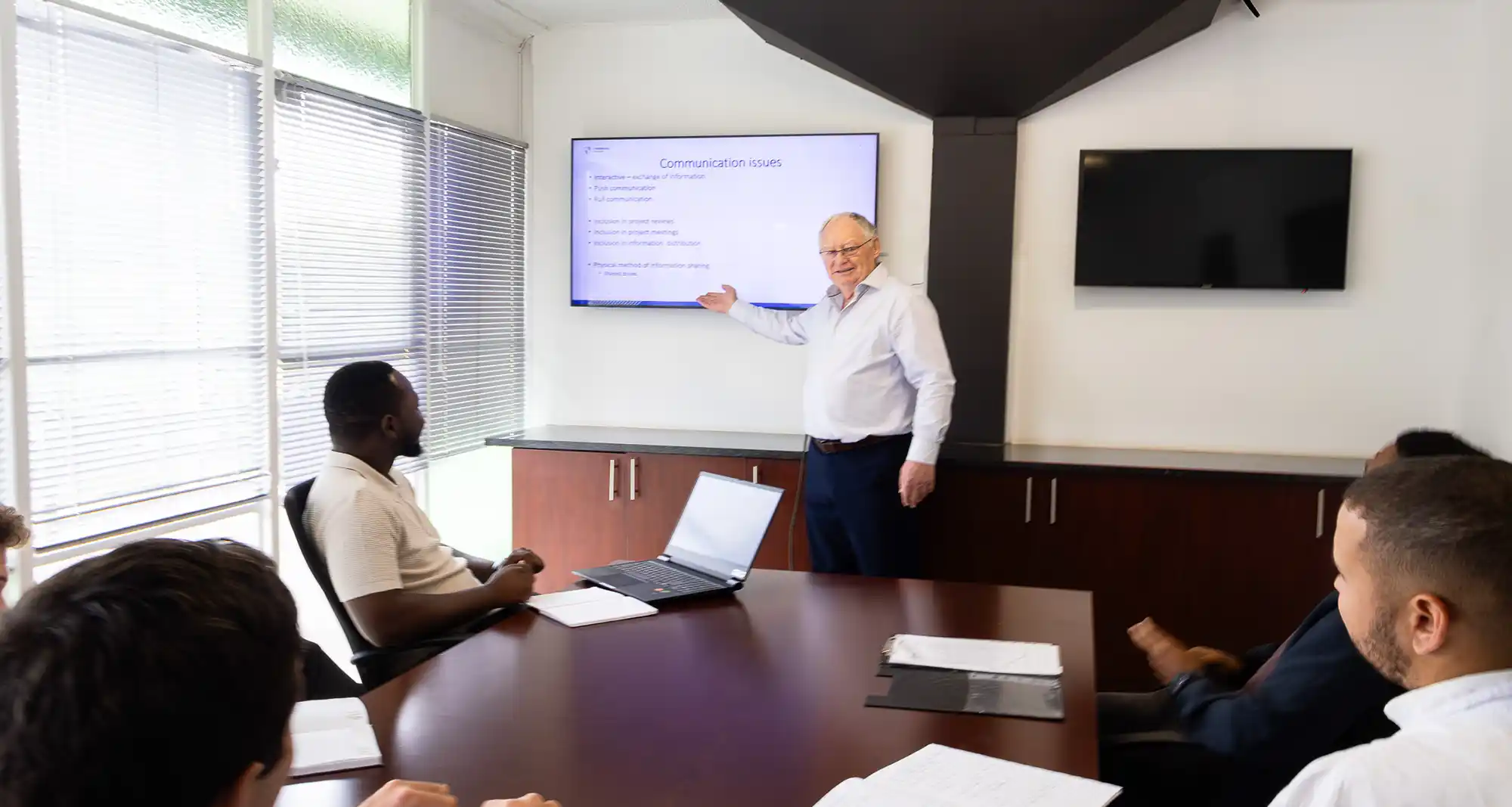
Finance, Data Analysis and Excel for Engineers and Project Managers
Finance, Data Analysis and Excel for Engineers and Project Managers
Technical professionals are often expected to make financial decisions that can determine the success or failure of a project. This practical course equips engineers and project managers with the financial knowledge and tools needed to make informed decisions throughout the project lifecycle.
The course is built around the way a CFO or financial manager evaluates a project, addressing key questions such as:
- Is this the right project for our organisation?
- Is the client, contractor or subcontractor financially stable?
- How can we effectively manage project costs and financial performance throughout the project?
Delegates will learn the language of finance, including key concepts such as EBIT, ROI and ROE, while developing the skills to assess project viability, manage budgets and control both time and costs.
With practical case studies and real-world examples integrated throughout, delegates will also receive:
- Reusable financial models and pre-built Excel templates.
- Advanced Microsoft Excel skills that can be applied immediately in the workplace.
Whether you are an engineer, project manager or built environment professional, this course provides the financial insight and practical skills needed to improve decision-making and deliver more successful projects.
 Share
ShareCourse Info
What you’ll learn
By the end of this programme, you will be able to:
- Understand the relationship between the income statement and balance sheet, and confidently interpret financial statements.
- Conduct financial analysis to assess opportunities, identify risks and make informed decisions.
- Understand and confidently use key financial terminology, including EBIT, WACC, ROE and ROA.
- Apply a structured investment process to evaluate a project’s financial viability.
- Understand and implement an Earned Value Management (EVM) system to monitor project performance.
- Use simple statistical techniques and regression analysis for forecasting and decision-making.
- Strengthen your Microsoft Excel skills with practical techniques and tools for financial analysis.
This course offers
Online
Online
- 16 hours of virtual training.
- Live virtual sessions via Microsoft Teams.
- E-certificate of completion.
- Accessible on all standard mobile and PC devices with Wi-Fi access.
In-Person
On Site
Contact us for a personalised quote

A course by

You get:
Certificate of Attendance
*Minimum 85% participation is required to qualify for a CPD certificate
Who this course is for:
- Managers
- Supervisors
- Project managers
- Engineers
- Technical specialists
- Professionals who need to understand the financial impact of their decisions.
- No accounting or finance background is required.
| Course Date | DELIVERY METHOD | COURSE FEE | SECURE YOUR SPOT |
|---|---|---|---|
| 21 - 22 Sep 2026 | ONLINE | R2 500,00 | COURSE CLOSED |
| 05 - 06 Nov 2026 | ONLINE | R2 500,00 | Book Now Team Booking |
Course Content
6 Discussion Points | 16 hours total length
Understanding Financial Statements
Gain a solid foundation in financial reporting and learn how to interpret key financial statements.
Topics covered:
- The purpose of accounting
- Understanding cash flow
- The income statement
- Improving financial performance
- Cost of goods calculations
- The balance sheet
- Identifying cash traps
- Understanding the limitations of GAAP
- The three-statement financial model
Assessing the Financial Health of an Organisation
Learn how to evaluate the financial strength of clients, contractors and suppliers using financial analysis.
Topics covered:
- Principles of ratio analysis
- Profitability, liquidity, efficiency and gearing ratios
- The DuPont analysis
- Identifying ROE challenges
- Analysing published financial statements
- Using the Altman Z-Score to assess financial risk
- Recognising warning signs in financial reports
- Budget analysis and common budgeting pitfalls
- Practical case study
Evaluating Project Financial Viability
Develop the skills to determine whether a project is financially worthwhile before committing resources.
Topics covered:
- Why organisations invest in projects
- The time value of money
- Project financing options
- Understanding lender requirements
- Building repayment calculators and amortisation schedules in Excel
- Calculating WACC and free cash flow
- Scenario analysis using Excel
- Terminal value calculations
- Project evaluation techniques:
- Payback Period
- Net Present Value (NPV)
- Internal Rate of Return (IRR)
- Benefit-Cost Ratio (BCR)
- Practical case study
Predictive Analytics for Project Forecasting
Use statistical techniques to improve forecasting and support better project decisions.
Topics covered:
- Forecasting methodology
- Identifying key cost drivers
- Understanding cost behaviour
- Correlation analysis
- Regression analysis
- Practical case studies
Earned Value Management (EVM)
Monitor project performance by integrating cost, schedule, and scope.
- Topics covered:
- Earned Value Management fundamentals
- Planned Value (PV), Earned Value (EV), and Actual Cost (AC)
- Cost Performance Index (CPI)
- Schedule Performance Index (SPI)
- Forecasting final project cost and completion time
- Building an EVM tracker in Microsoft Excel
- Practical case studies
Next-Generation Excel for Financial Analysis
Leverage advanced Excel tools to automate financial analysis and reporting.
Topics covered:
- Working with tables
- PivotTables and PivotCharts
- Slicers and timelines
- Power Query
- Data automation and transformation
About this course
This practical, application-focused course equips engineers and project managers with the financial knowledge and tools needed to make informed project decisions. Through practical exercises, case studies and Microsoft Excel applications, delegates will learn how to evaluate project viability, interpret financial information and manage project performance with confidence.
The course follows the financial decision-making process used by CFOs and financial managers, covering financial analysis, investment appraisal, Earned Value Management (EVM), forecasting and advanced Excel techniques. Participants will leave with practical skills, reusable financial models and tools that can be applied immediately in the workplace.
Disclaimer: To comply with CPD requirements, participants must actively participate in at least 85% of the online session. Participation is monitored through Slido, which records engagement throughout the training. CPD certificates will only be issued to participants who meet this requirement.